
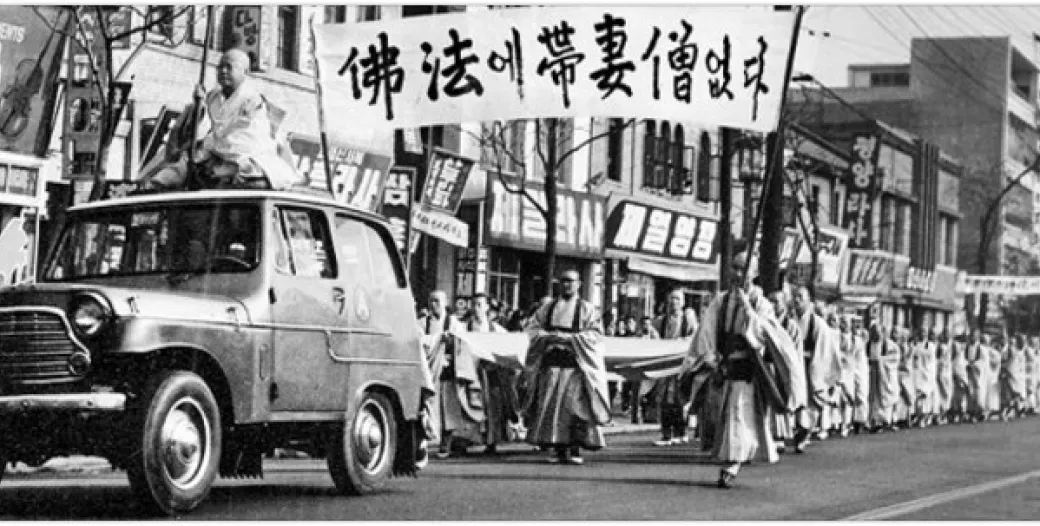
2026 Morrell Lecture in Asian Religions: Conflict over the Identity and Future of Korean Buddhism: The Buddhist Purification Movement, 1954–1970
Immediately after liberation from Japanese colonial rule in 1945, celibate Korean Buddhist monks sought to abolish the Temple Ordinance instituted by the Japanese Governor-General’s Office in 1911 by rejecting the practice of clerical marriage and reinstituting celibate monasticism, repealing the Japanese-style system of control over monasteries and temples, and reorienting the Korean Buddhist Order towards the propagation of Sŏn Buddhism. Their attempts were unsuccessful until, on May 20, 1954, the celibate monks Ha Tongsan 河東山 (1890–1965) and Yi Ch’ŏngdam 李靑潭 (1902–1971) appealed to President Syngman Rhee 李承晚 (1875–1965), whose regime had stabilized with the cease fire in the Korean War and who heartily assented to the “de-Japanification” of Korean Buddhism. This became known as the “Buddhist Purification Movement” (Pulgyo chŏnghwa undong 佛敎淨化運動). Refusing any compromise with the married majority of Korean monks, the celibate minority used connections to the presidency, government organs, and the media to advance their case. From the mid-1950s to the early 1960s, the married and celibate monks were grid-locked in fierce litigation in South Korean courts. Because the succeeding regime of Park Chung Hee 朴正熙 (1917–1979), the judicial courts, and the Korean population on the whole were sympathetic to the cause of the celibate monks, ultimately the married monks willfully separated themselves from the celibate monks and organized the T’aego Order 太古宗 of Korean Buddhism on May 8, 1970. The celibate monks’ unrelenting emphasis on reestablishing celibate monasticism, their unyielding tenacity in assuming administrative control over the Chogye Order’s 曹溪宗 major monastic complexes, and their persistent championing of Chinul 知訥 (1158–1210) as the founder of the Korean Sŏn tradition functioned as immovable ideological pillars enabling the ultimate success of the celibate monks.
This event is free and open to the public. A reception with light refreshments will follow.
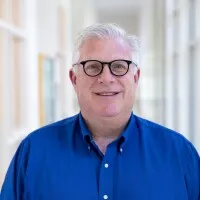
Richard was raised in Los Angeles, California, and served a mission for The Church of Jesus Christ of Latter-day Saints in the Korea Pusan Mission from 1988 to 1990. He double majored in Asian Studies and Korean at BYU, graduating in 1993, and later earned a Ph.D. in East Asian Languages and Cultures (with emphasis on Korean and Chinese Buddhism and early Korean History) at UCLA in 2001. He was a Fulbright Senior Researcher at Dongguk University in Korea from 2007 to 2008, He taught in the History Department at BYU-Hawaii from 2008 to 2018. His wife of 17 years, Younghee Yeon McBride, passed away from pancreatic cancer in February 2018. They are the parents of two sons, David and Sean.