
Colloquium Series: Writing a Counter Narrative for Modern Korea: Borders, Borderlands, and Diasporas
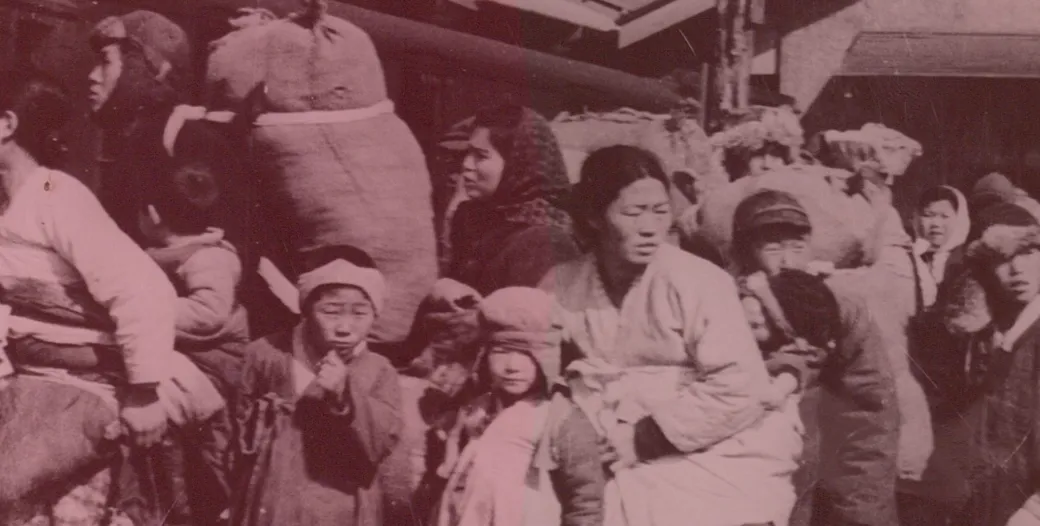
This talk explores the possibilities of writing a counter narrative for Korea’s modern history—through borders, borderlands, and diasporas. Korea’s history has often been told as a story of colonization/victimization on the one hand and freedom fighters/revolutionaries on the other, both perspectives emphasizing the power and gaze of an outside empire. How do we invert this narrative to center native actors and the transregional dynamics in which they were situated? I ruminate about reading against and with multiple imperial archives and the conundrum, for a time, of the lack of a Korean “archive.” The talk offers a view of Korea’s northern borderlands at the turn of the 20th century, as well as the borders and migrants/refugees that suddenly came into being after decolonization (1945-50).
_____
Alyssa Park is the author of Sovereignty Experiments: Korean Migrants and the Building of Borders in Northeast Asia, 1860-1945 (Cornell University Press, 2019), which examines how questions of sovereignty—claims over land and subjects—became a central concern to multiple states as they confronted the unprecedented mobility of Koreans. Based on sources from Korea, the Russian Far East, St. Petersburg, and Manchuria, the book explores the history of the Korean community across Russia and China, illuminating the process by which this border region and people were claimed as belonging to surrounding states.
Dr. Park is currently working on a book about population displacement in the two Koreas. Through the lens of Korean “refugees,” it brings together the transnational histories of postcolonial Korea, nascent South Korean regime, and Soviet and U.S. occupations during the critical interregnum of 1945-50.
Dr. Park’s research has been supported by grants and fellowships from the Woodrow Wilson Center, Kennan Institute, Yale Council on East Asian Studies, Korea Foundation, American Council of Learned Societies / Mellon, International Research and Exchanges Board, and Fulbright-Hays. She earned an AB from Princeton University and a PhD in History from Columbia University.